4 min read
How Do Growing Nonprofits Build Relationship Systems That Don’t Rely on Staff Memory?
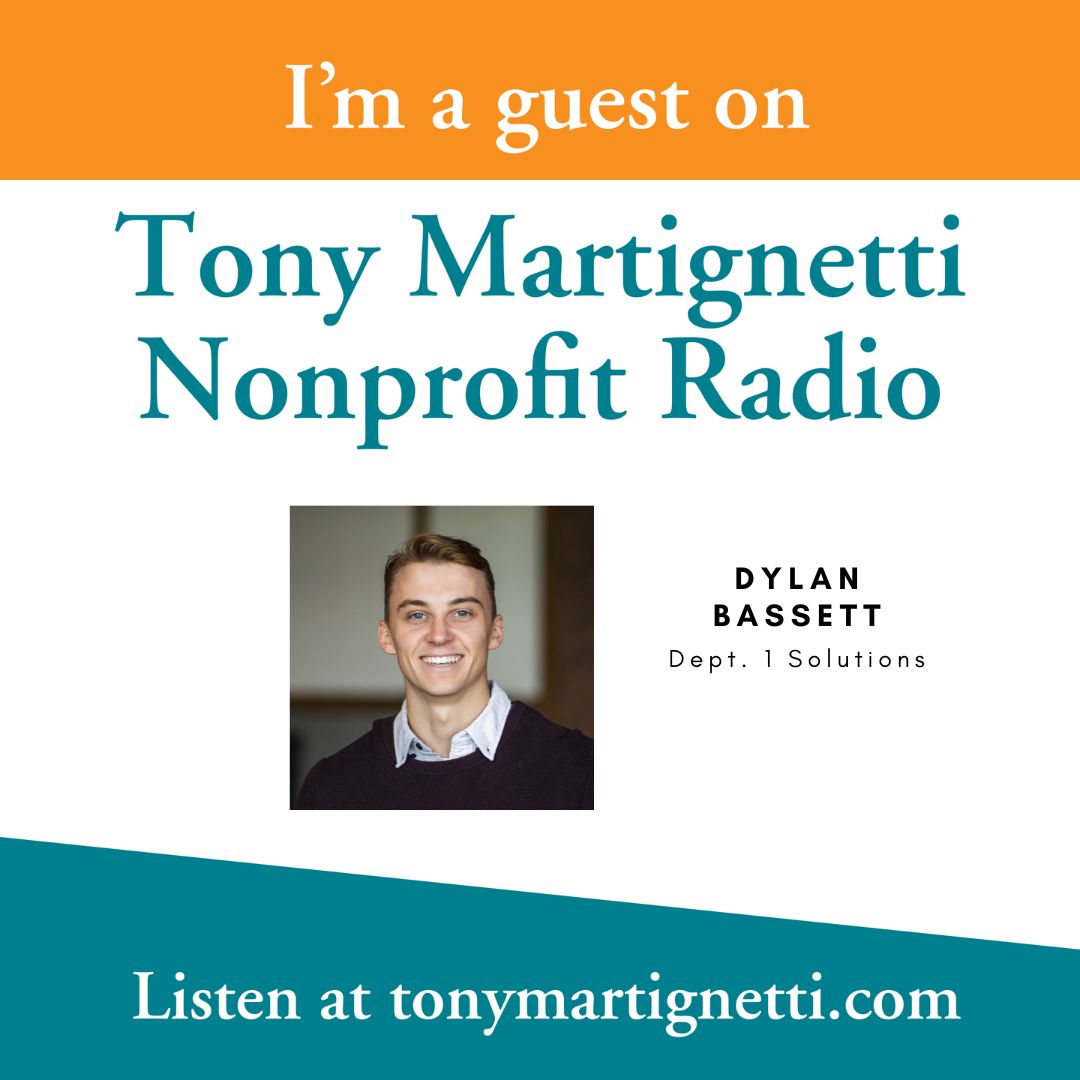
This post covers how growing nonprofit organizations build relationship data systems across donor, funder, partner, and program relationships when those relationships have outgrown existing tools — and why client ownership of the result matters as much as the build itself. It draws from a conversation with Tony Martignetti on Nonprofit Radio.
Listen to the Episode
I joined Tony Martignetti on Nonprofit Radio to talk about something the sector rarely puts at the center of a conversation: the systems underneath the work. You can listen here: https://tonymartignetti.com/2026/02/nonprofit-radio-for-february-23-2026-systems-processes-so-your-people-thrive/
Most of what gets discussed in nonprofit circles is fundraising, communications, and CRMs. The plumbing that connects all of it and decides whether your team spends its day on people or on data entry tends to fall out of the frame. That plumbing is what we build.
Key Takeaways
Growing nonprofits need to manage three kinds of relationships at once: donors and funders, partners and co-grantees, and program participants and clients. Relationship systems are what keep all three from living in a single staff member’s memory.
The clearest operational signal that relationships have outgrown the tools: staff are doing more work by hand between platforms than the platforms are doing on their own.
Connecting the donation platform, the CRM, and the accounting system removes a person from the middle of each gift transaction and allows the development director to spend the afternoon on a donor relationship rather than on data entry.
A digital intake workflow can route new clients to the right program specialist, track every service delivered, and make that data ready for funder reports without reconstruction from scratch.
The ownership standard is a measure of a successful systems initiative: a system that depends on the consultant, the vendor, or the one person who remembers how it runs has not fully solved the problem.
What Is a Relationship System for a Growing Nonprofit?
A relationship system is the connected set of tools and processes that keeps track of the people an organization depends on, so the organization does not have to rely on staff memory to keep those relationships moving.
Dept.1 Solutions builds these systems for nonprofits. Most nonprofits manage three kinds of relationships at once: donors and funders, partners and co-grantees, and program participants and clients. A smaller organization usually manages one of these well. A growing organization has to manage all three, and records for each tend to live in separate tools that were never designed to talk to each other. The full picture ends up in one or two people’s memory, that’s the problem that Dept.1 solves.
The organization we serve own everything Dept.1 builds. Each system is documented, fitted to how the team already works, and built so it does not depend on the consulting firm, on a vendor, or on the one person who knows how it runs.
What Does It Look Like When Relationships Have Outgrown the Tools?
The gap usually does not announce itself until something breaks. A staff member leaves and institutional knowledge walks out with them. A funder asks for a report and it takes a week to assemble by hand.
The clearest signal: the team is doing more work through manual steps than the systems are doing on their own. Several patterns appear consistently across organizations at this stage:
Staff copy data from one platform into another because the two do not connect
A CRM that costs real money functions as a shinier spreadsheet — a long list of names no one is acting on
Donor follow-up lives in someone’s notebook instead of the system
The person who “knows the database” is the only one who can produce a clean report
When staff are the integration layer — quietly moving information between tools that should move it themselves — the relationships have outgrown the setup built to hold them.
Where Do Donor and Funder Relationships Break First?
A common break point sits between the donation platform, the CRM, and the accounting system. In most organizations, the connection between those three is a person.
A gift comes in, someone checks the donation platform, enters it into the CRM, logs it in the accounting software, then writes a note to trigger a thank-you or stewardship call. Dept.1 builds systems where those handoffs happen without a person in the middle. A donation comes in, flows to the CRM, and the system creates the donor-stewardship task and the bookkeeper reconciliation task automatically. The development director spends the afternoon on a donor relationship, not on data entry into QuickBooks.
The same connected data makes segmentation possible at scale. Reaching a major donor differently from a first-time $25 giver is often treated as a communications problem. It is a data problem first. An organization cannot reach people according to how they engage with the mission until its systems can reliably report what that engagement is.
What Does a Program Participant Intake System Replace?
A service-delivery nonprofit’s intake process typically starts with a paper or website form, which someone types into a system by hand, with staff chasing follow-ups manually. Dept.1 replaces that workflow with a single digital intake form, reachable on a shared office device, a QR code, or the website.
That form creates the client record automatically. It routes the case to the right program specialist based on what the person needs — whether that is a direct service or a referral. The specialist sees the new case at the top of their list, reaches out, and the system sets the follow-up reminder. Every service delivered gets tracked against that client record through to case closing.
This enables the program coordinator to think about the client’s needs rather than managing paperwork. When the executive team builds the annual report, the demographic and service data is already there — who was served, when, and how — ready to show funders instead of reconstructed from a constellation of spreadsheets.
Where Should a Team Start?
Before any new tool, start by writing down what the organization already does as a plain current-state analysis. Think of achieving “how to make a peanut butter and jelly”-level of detail.
Documenting how a new donor gets stewarded, how a gift moves from the CRM to accounting, how a client moves through intake and program delivery, and how a report gets compiled does two things immediately. Everyone starts running the process the same way, which cuts questions and speeds up onboarding. And it produces the map needed to see where technology can support the steps a person is doing by hand.
Technology gets mapped to the process. The process does not get bent to fit the tool. Most teams arrive as passengers to their software — working a certain way because the system demands it. The better path is to describe how the team actually works and build the system to match.
Who Owns the System When the Work Is Done?
Client ownership means the system does not depend on Dept.1, on a specific vendor, or on the one internal expert who remembers how it runs to keep working.
Dept.1 is system-agnostic: the right tool is the one that fits how a team works, not the one the consultant happens to prefer. Every system gets documented and handed off so the organization can run it without ongoing outside support. No lock-in to a vendor, and no lock-in to the firm.
This matters because consultants in the sector perform different jobs under the same title. Some write strategies. Some select tools. Some build. Problems begin when an organization hires one and receives another. If you already have a strategy and a tool you like, you need someone who will build it — not deliver another plan and ask you to execute it. The measure of any engagement is whether the organization owns and understands the result a year later.
Final Thought
When relationship systems are built with intention across all three lanes — donors and funders, partners and co-grantees, and program participants and clients — the development director gets time back for donors, the program coordinator can focus on the client rather than the paperwork, and leadership walks into the annual report with the data already in hand.
The goal is not more technology. The goal is a set of relationship systems the organization owns, that hold the full picture so no single person has to.
If the donor, partner, and program data has outgrown the tools built to hold it, and the person who knows how it all fits is carrying it in their memory, that is exactly the problem we solve at Dept.1 Solutions. If you have a hunch your systems could be doing more for your team, try our Relationship Data Readiness Check and we’ll send you a quick read on where to look first: https://www.dept1solutions.com/ready
