4 min read
How to Build a Donor Outreach Pipeline in Monday.com
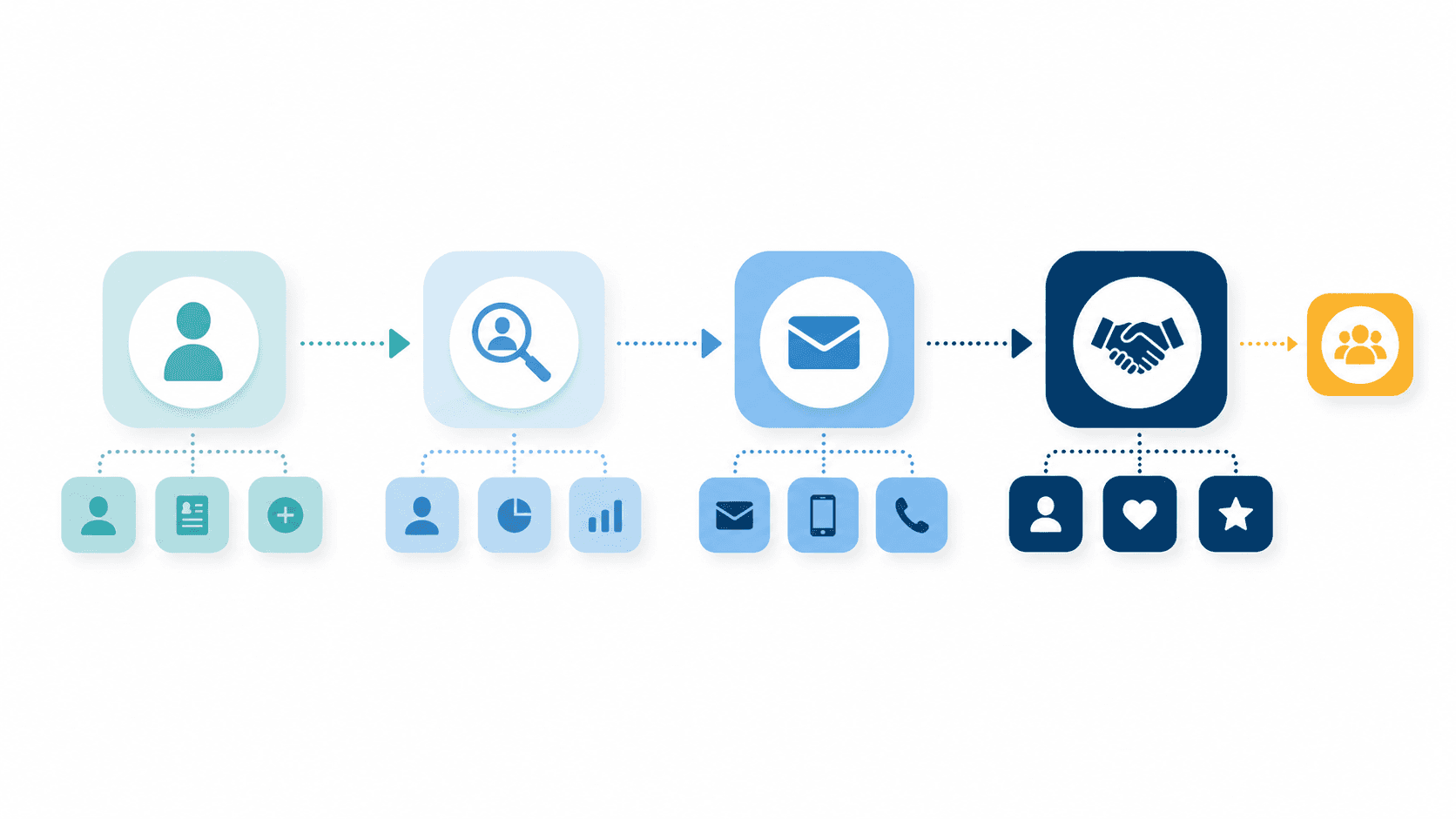
A step-by-step system for managing high-capacity prospect outreach from first contact to closed gift; and why most nonprofit pipelines stall before they get there.
Most nonprofits that work from a prospect list run into the same problem. The list exists. The intention is there. But there's no system behind what happens after the first email goes out — who follows up, when, in what order, and what gets logged.
Contacts age out in a spreadsheet. Outreach stalls. Nobody knows what anyone else has already said.
This is a solvable problem. And Monday.com, configured the right way, can run a serious donor outreach pipeline.
This is how we built one.
The Starting Point
The organization we worked with had identified a pool of high-capacity prospects and wanted to run a coordinated outreach effort: a combination of cold email and phone outreach, managed across a small team with defined roles. One person owned prospect coordination, another owned enrichment, and a team of specialists handled the direct contact.
Before the system was in place, the work was happening in disconnected tools. Contacts were being imported manually, records were getting overwritten or completely wiped during manual import processes, and nobody had a clear picture of where any given prospect stood. The team was motivated and the strategy was sound. The infrastructure just wasn't keeping up.
We built a phase and status lifecycle in Monday.com that gave the whole operation a shared journey.
The Core Design Principle
Before getting into the phases, the most important architectural decision is this one.
Phases advance manually. Automations fire after the phase change.
The team clicks to move a contact from one phase to the next. That click is a deliberate act. It means someone reviewed the situation and made a judgement call. Once the click happens, automations handle what comes next: setting the next action, assigning the right person, logging the activity, and calculating the due date.
This keeps humans in the loop and in control of the pipeline while eliminating the administrative overhead of tracking what needs to happen and when.
The Phase Framework
We organized the pipeline into four functional groups, each representing a distinct stage in the relationship between the organization and a prospect.
Intake and Qualification
Every contact enters the pipeline at zero. Nothing happens automatically here. This is the holding stage before a contact is ready to work.
From there, a contact is marked as ready for active engagement following enrichment. An automation sets a due date for the enrichment task and, for high-capacity prospects, flags the record for strategic review and routes it to senior leadership before anyone makes contact.
The purpose of this group is to ensure that no outreach happens before the record is ready and the right person has eyes on it.
Enrichment and Assignment
This is where the preparation happens. Contacts move through a sequence of enrichment steps to fill in contact details, pull background information, and confirm the right outreach channel before being assigned to the person who will make first contact.
Each phase in this group has an assigned owner and a due date set automatically on phase entry. The coordinator can filter the view to see exactly which contacts are waiting at each stage and who owns them. Nothing falls through because the system surfaces it.
By the time a contact reaches the end of this group of phases, a caller has been assigned, the record is complete, and the prospect is ready for live outreach.
The Outreach
This is the active cadence. A structured sequence of calls, voicemails, and follow-up emails moves through defined intervals. Days, not weeks. With each follow up set automatically when the previous phase is entered.
The sequence runs deep: multiple call attempts, multiple email touchpoints, each one logged and each one visible to anyone on the team. Because the pipeline runs through a shared Gmail integration inside Monday, every email sent from this sequence is visible to the full team regardless of who sent it. A caller picking up a contact mid-sequence can see the full history of what's already gone out, including emails sent from a teammate's alias. Nobody starts from scratch.
If a contact doesn't respond through the full outreach sequence, they move into a long-term nurture phase rather than disappearing. They stay in the system, get added to an email list, and are assigned back to senior leadership for periodic attention.
If a contact does respond at any point, whether through an email reply or a connected call, they move onto the next phase as they were.
Relationship and Close
The last group is intentionally manual. No automations here.
This is where the relationship takes over from the system. Two-way communication, live meetings, asks made, commitments secured, gifts closed.
Each of these stages requires human judgement, context, and care that no automation should replicate.
The system's job here is visibility, not direction. Leadership can see at a glance how many prospects are in active conversation, how many are at the ask stage, and how many have committed. The pipeline doesn't tell anyone what to say, it just makes sure nothing gets lost.
What the System Made Possible
With this exact lifecycle system in place, the team distributes work across roles without losing track of handoffs. The coordinator knows exactly which contacts were ready for enrichment and which had been assigned. Callers knew their queue and their next action without checking in. Leadership had a view of the full pipeline without needing a manual report.
Before the system was stable, the team's energy went into coordination. Figuring out who had talked to whom, what had been sent, and what needed to happen next. Once the lifecycle system was in place, that overhead disappeared. The next action was always visible, always assigned, and always dated. The team stopped managing the process and started working the pipeline.
Shortly after the system was live, the team closed their first major gift through the pipeline. That result validated both the outreach strategy and the infrastructure supporting it. The team coalesced around the process, and the question of who was following up with whom, or what had already been said, stopped being a question at all.
The Reality of Building a System Like This
This system didn't exist out of the box. It required a stable contact data model before any automation could be built on top of it. It required agreement with the team on what each phase meant and who owned each stage. It required a period of stabilization where the team paused unsupervised configuration and rebuilt on a clean foundation.
The phase framework itself is not complicated. But the sequencing of foundation first, then lifecycle, then automation — that's what makes a system like this durable.
If your development team is working from a prospect list and the follow-up process lives in someone's head or a spreadsheet, this architecture is worth understanding. The tactics only work if the infrastructure can keep up.
Dept.1 Solutions helps nonprofits build the operational systems that make fundraising sustainable. If your CRM isn't supporting your development team the way it should, we should talk.
